


The Riad: Architecture Built Around the Courtyard
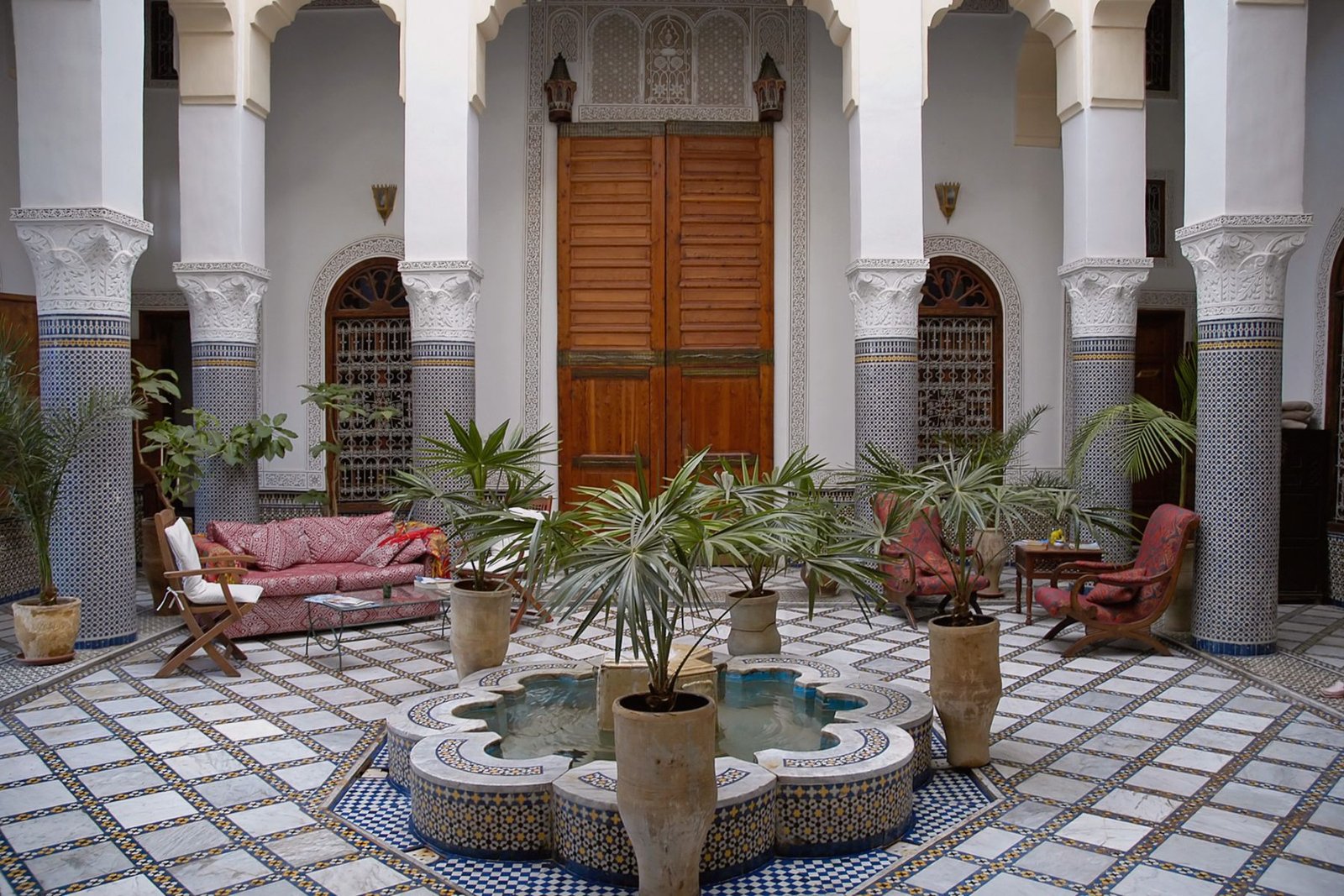
The riad is perhaps the most recognizable expression of traditional Moroccan architecture.
At its simplest, a riad is a house organized around an interior courtyard. Rather than opening extensively onto the street, the home turns inward, creating a private world at its centre. Bedrooms and living spaces traditionally surround this central space, often across several levels.
This inward-facing design is closely connected to ideas of privacy and hospitality. The exterior can appear relatively discreet, while the interior reveals gardens, fountains, decorative tilework and carefully framed views.
A Moroccan riad is therefore more than a type of accommodation. It reflects a way of organizing domestic life around a protected central space.
This is one reason why staying in a riad can feel so different from staying in a conventional hotel. The architecture itself creates a transition between the intensity of the city outside and the quieter rhythm of the home within.
The Moroccan Courtyard : The Heart of the Home
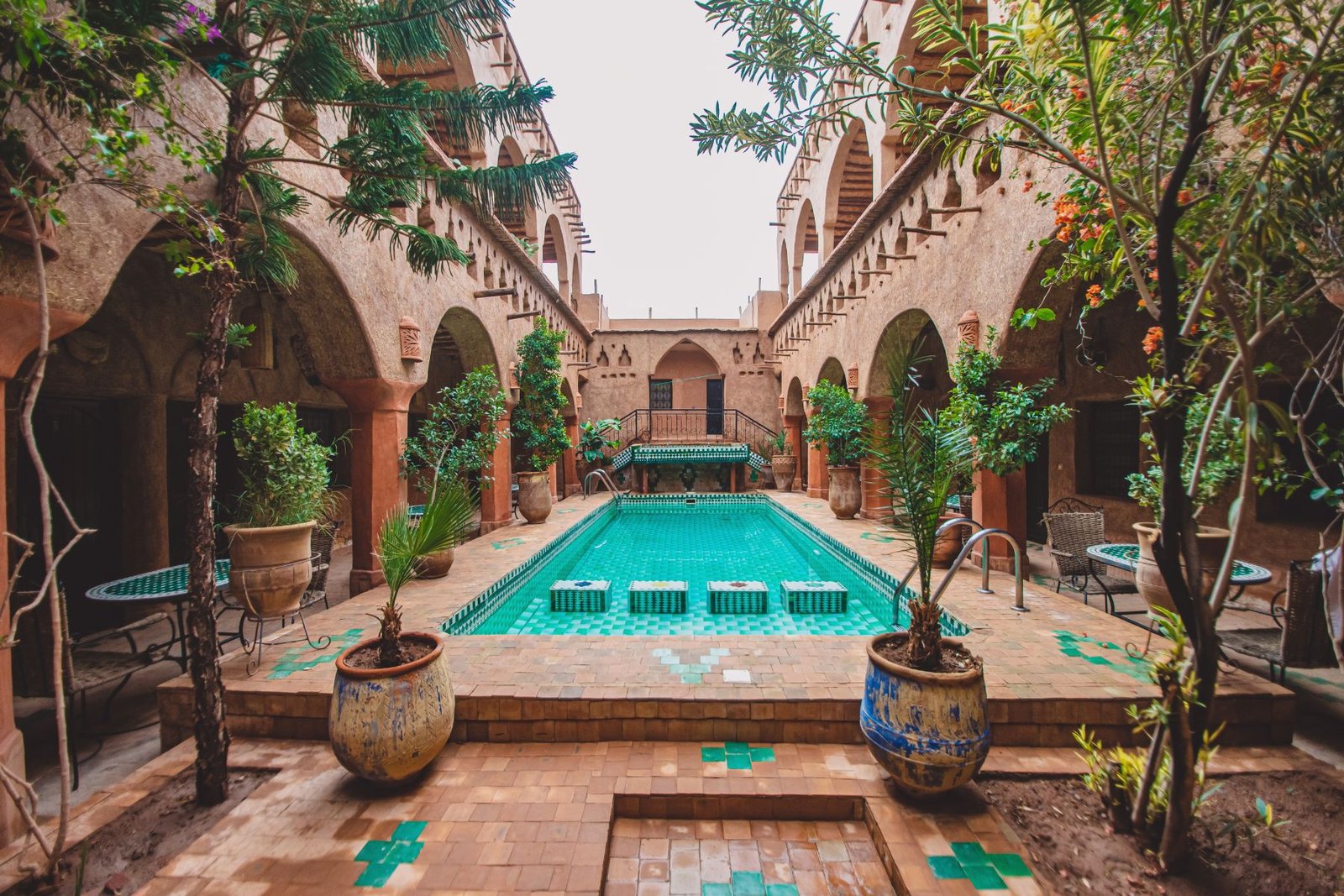
The Moroccan courtyard is one of the defining features of the country's traditional homes.
Often referred to as a riad or wast ed-dar in traditional domestic architecture, the courtyard provides light, ventilation and a private outdoor space within the home. Depending on the property, it may contain a garden, trees, a fountain, a pool or simply a central area where daily life unfolds.
The relationship between light and shade is particularly important. In a warm climate, the courtyard offers a cooler environment while allowing daylight to reach the surrounding rooms.
But the courtyard also shapes the feeling of the house. It creates a natural meeting point between interior and exterior, encouraging moments of rest, conversation and hospitality.
In many Moroccan homes, architecture is not simply something to look at. It determines how the space is experienced.
Zellige : Morocco's Iconic Geometric Tilework
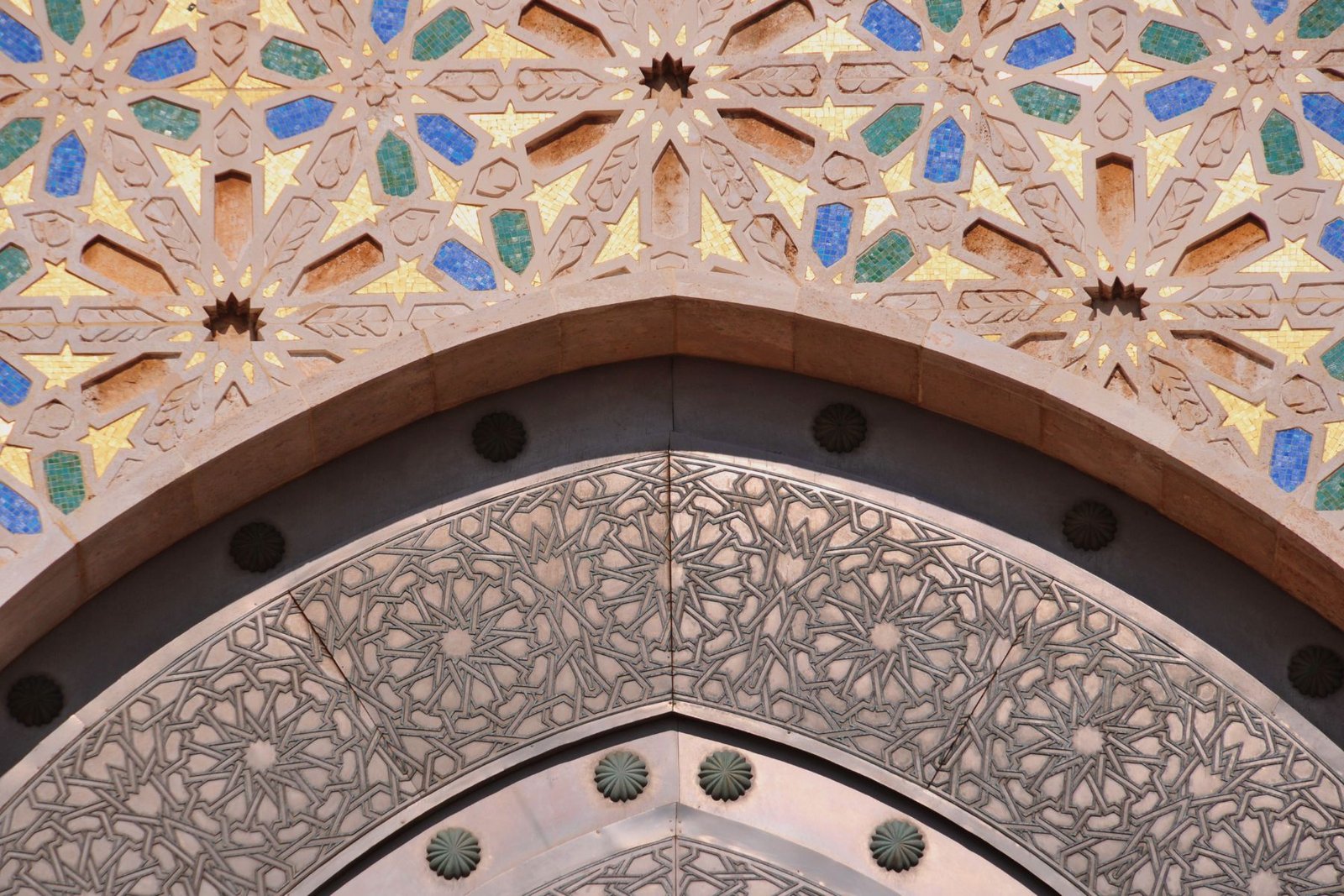
Few elements are more closely associated with Moroccan design than zellige.
These small, hand-cut tiles are assembled into intricate geometric compositions, often using repeated shapes and carefully balanced colors. Traditionally produced by skilled artisans, zellige can be found across Morocco in riads, palaces, fountains, mosques, hammams and private homes.
What makes Moroccan zellige tile particularly distinctive is its handmade character. Slight variations in shape, surface and color give finished compositions a depth that differs from perfectly uniform industrial tilework.
Zellige is also remarkably versatile. Traditional designs can be elaborate and highly decorative, while contemporary interiors often use simpler compositions or more restrained palettes.
The result is a material that connects Moroccan architecture design with craftsmanship. A wall, floor or fountain becomes part of the visual identity of the space without necessarily overwhelming it.
Moroccan Arches, Doors & Decorative Details
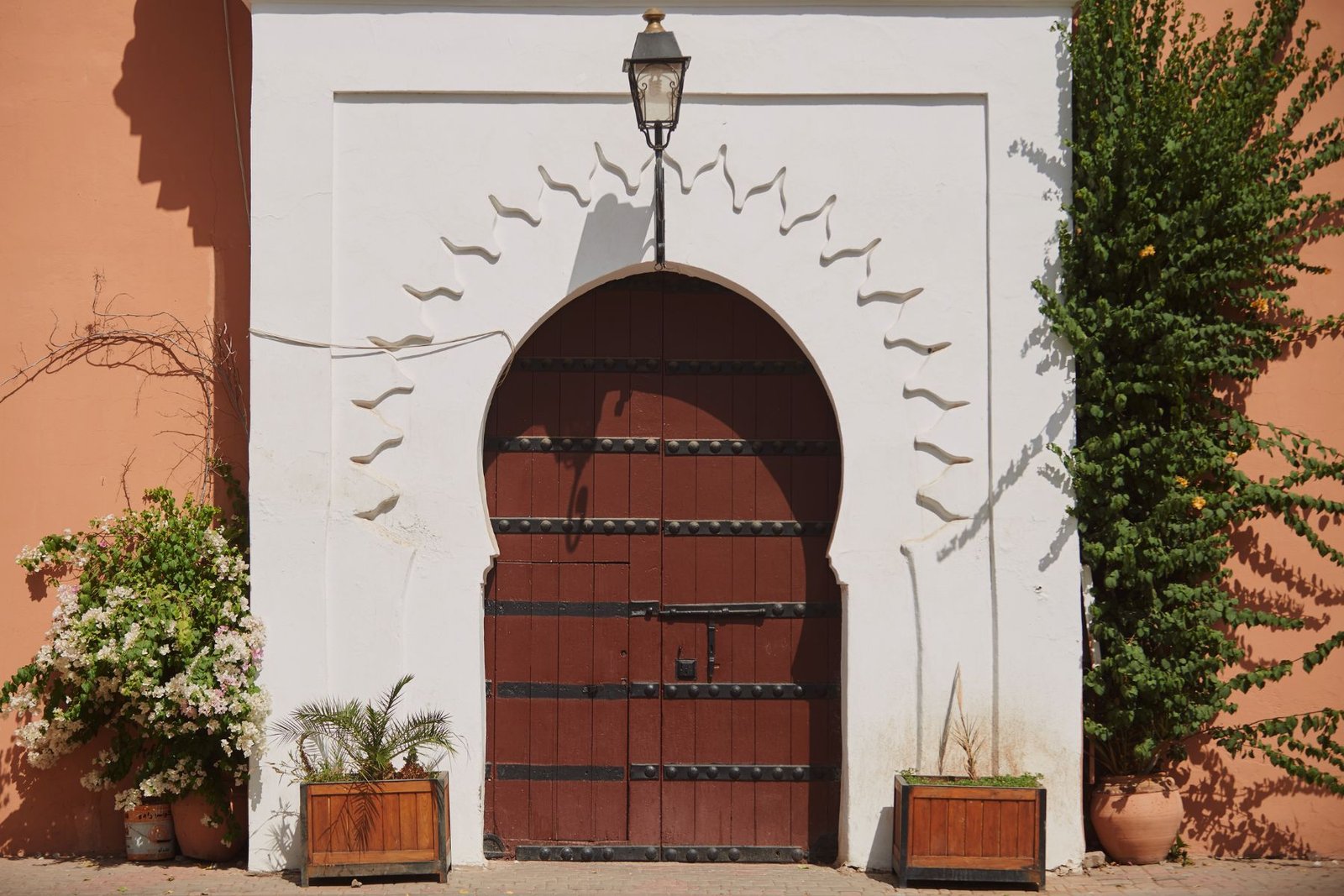
Beyond zellige and courtyards, a number of architectural details give Moroccan interiors their distinctive character.
Arches are particularly important. Horseshoe and keyhole-inspired forms appear in doorways, windows and passages, creating a sense of rhythm as you move from one room to another.
Carved wood is another recurring element, used for doors, ceilings, screens and furniture. Stucco can be carved with intricate patterns, while traditional plasterwork creates texture across walls and ceilings.
Then there are the doors themselves. In a traditional Moroccan house, the entrance often creates a deliberate transition from the public street to the private world inside. A relatively simple exterior can lead into a highly detailed interior.
Together, these details form some of the most recognizable Moroccan architecture features, but their purpose is not purely decorative. They frame movement, control light and create a sense of intimacy within the home.
Riads, Palaces & Traditional Moroccan Homes
Morocco's traditional residential architecture takes many forms.
The traditional Moroccan house may be modest in scale, with a simple entrance leading to a courtyard and rooms arranged around it. A riad follows this inward-facing principle but can range from an intimate private home to an elaborate multi-room residence.
Palaces take the same attention to proportion, craftsmanship and gardens to a much grander scale. Large courtyards, reception rooms, fountains, gardens and decorative surfaces create spaces designed for hospitality and ceremony.
The differences are not simply about size. They reflect different ways of living and receiving guests.
This is also where Moroccan architecture becomes particularly interesting for travelers. A traditional house, riad or palace can reveal something about Moroccan hospitality through the way its spaces are arranged, where guests are welcomed, where people gather and how private areas are separated from shared ones.
Moroccan Architecture in Marrakech, Fes & Casablanca
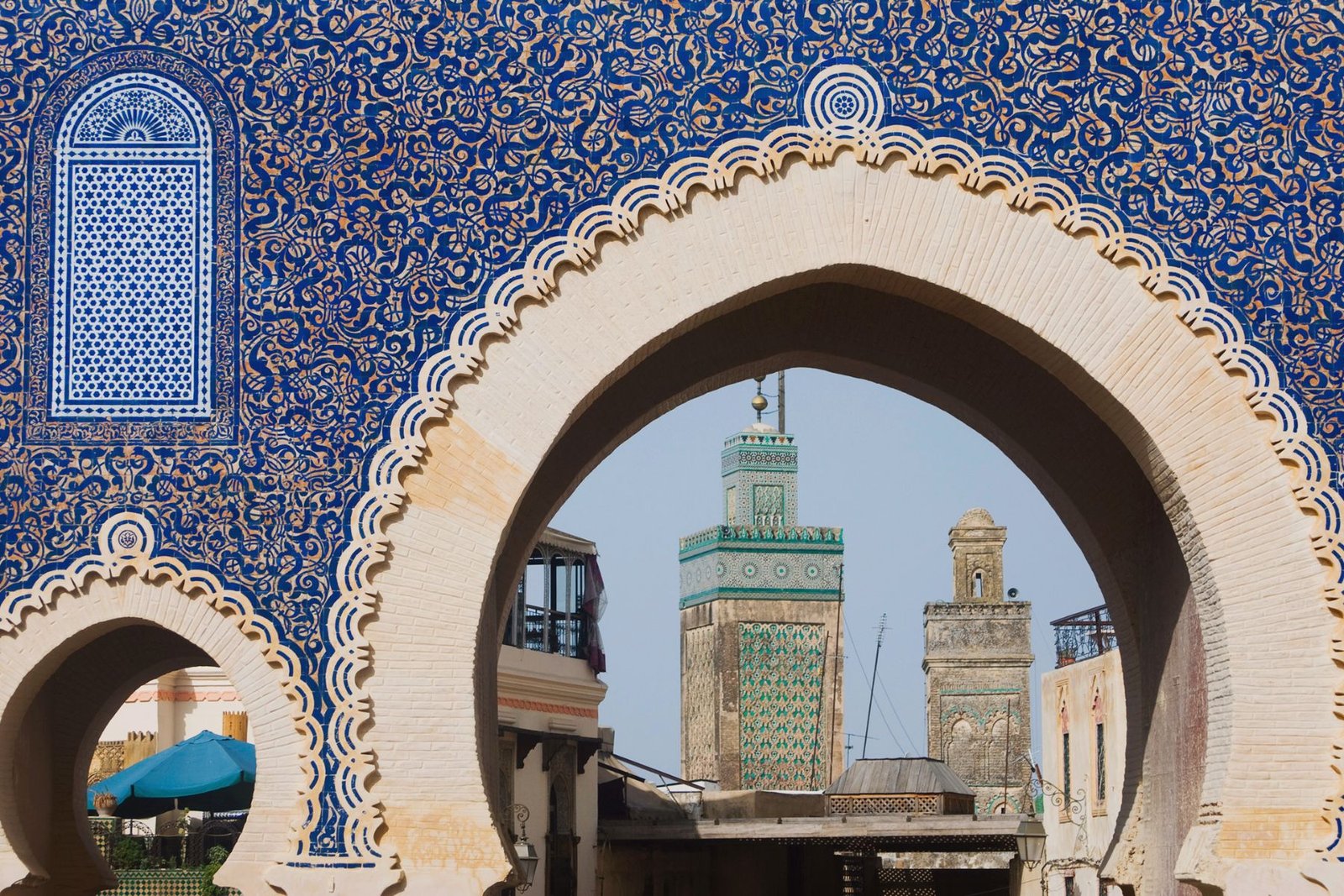
Moroccan architecture changes from one city to another, shaped by local history, materials and influences.
1. Marrakech: Ochre Walls, Riads & Palaces
Marrakech is perhaps the city most associated with traditional Moroccan architecture. Its historic buildings are strongly connected to the city's characteristic ochre tones, while the Medina is filled with riads, palaces, souks and traditional houses.
Inside a Marrakech riad, the contrast can be striking: discreet streets give way to courtyards filled with plants, fountains, zellige and carved details.
The city also offers a more contemporary interpretation of Moroccan design, particularly in private residences, restaurants and boutique properties where traditional craftsmanship is combined with modern proportions and furniture.
2. Fes: Craftsmanship at the Centre
Fes offers another perspective on Moroccan architectural heritage. Its historic Medina is known for its dense urban fabric, traditional houses and exceptional craftsmanship.
Zellige, carved plaster, cedar wood and intricate geometric decoration appear throughout historic buildings. The city remains closely associated with traditional Moroccan crafts, making it an important place to understand the relationship between architecture and artisanship.
A Fes riad often makes this connection particularly visible, with elaborate interiors organized around courtyards and decorated with traditional materials.
3. Casablanca: Moroccan Architecture Meets Art Deco
Casablanca tells a different story. As a modern economic centre, the city is known for its Art Deco heritage as well as buildings that combine Moroccan elements with modern architectural influences. This creates a distinctive urban landscape where traditional motifs exist alongside geometric façades, wide boulevards and contemporary design.
Casablanca architecture therefore offers an important reminder that Moroccan design has never been completely static. It has continuously absorbed new influences while retaining recognizable local references.
Moroccan Architecture Today
Traditional Moroccan architecture continues to influence contemporary design.
Today, architects and interior designers reinterpret familiar elements rather than simply reproducing them. A modern residence might incorporate zellige into an otherwise minimalist interior. A contemporary riad may preserve its courtyard while introducing modern furniture and lighting. A villa can combine traditional plasterwork and carved wood with open-plan living and contemporary landscaping.
This balance between heritage and modernity is at the heart of contemporary Moroccan architecture.
The same approach can be seen in Moroccan interior design. Natural materials, textured walls, handcrafted furniture, geometric patterns and warm earth tones can create spaces that feel distinctly Moroccan without becoming overly traditional.
The result is not a single definition of Moroccan style, but an evolving design language.
Experiencing Moroccan Architecture Through a Stay
Architecture is often something we visit. In Morocco, it can also be something we live in.
Staying in a riad, villa or palace changes the way traditional design is experienced. Instead of simply passing through a courtyard, you might begin the morning there. Instead of admiring zellige for a few minutes, you notice how its colors change with the light throughout the day.
You experience the relationship between interior and exterior, the quiet of a garden, the shade beneath a traditional arcade and the details of handcrafted materials at a much slower pace.
This is where architecture becomes part of the art of living.
At Leonis Collection, we see a Moroccan stay in much the same way. The character of a residence matters not only because of how it looks, but because of how it shapes the experience around it, from the rhythm of a morning in a private courtyard to an evening spent beneath a terrace overlooking the garden.
Because in Morocco, some of the most memorable places are not simply destinations to visit. They are spaces to experience.


Be the first to leave a thoughtful comment.